
Sheboygan People Search Guide
Sheboygan People Search usually works best when you separate the local record trail into clear pieces before you begin. Police records, city clerk files, court cases, custody checks, and vital records all come from different offices, so a single name search rarely tells the whole story. If you know whether the person you are looking for is tied to an incident, a municipal file, or a state court entry, the right office becomes much easier to find. The city pages and state tools below give you a practical path without forcing you to guess at the first step.
Sheboygan People Search Basics
For a Sheboygan search, the city website at sheboyganwi.gov is the cleanest place to start because it points you toward the offices that actually keep local records. A police record belongs with the police department, a city file belongs with the clerk, and a court matter may need a state court search before it makes sense. That sounds obvious, but it matters when you are trying to find one person across several record systems. Sheboygan People Search gets easier as soon as you decide whether the trail looks municipal, judicial, or state based.
The best first question is not always who you are looking for, but what kind of record you expect to find. If the name came from a traffic stop, a complaint, or a neighborhood incident, start with police. If the name showed up in a meeting packet, city notice, or local filing, start with the clerk. If you only have a court date or a docket reference, go straight to the Wisconsin court tools. That order keeps the search from drifting and helps you avoid asking the wrong office to do work it cannot do.
The city homepage at sheboyganwi.gov also helps when you want to confirm where a local department sits before you call. A municipal directory is not the same thing as a records request, but it saves time by showing you which office actually owns the file. In a city search, that kind of map is often more valuable than a broad name index because it turns a vague question into a specific request.
The city image below matches that starting point and shows why a local route is usually the fastest route when you know the record should come from Sheboygan rather than from a county or state source.
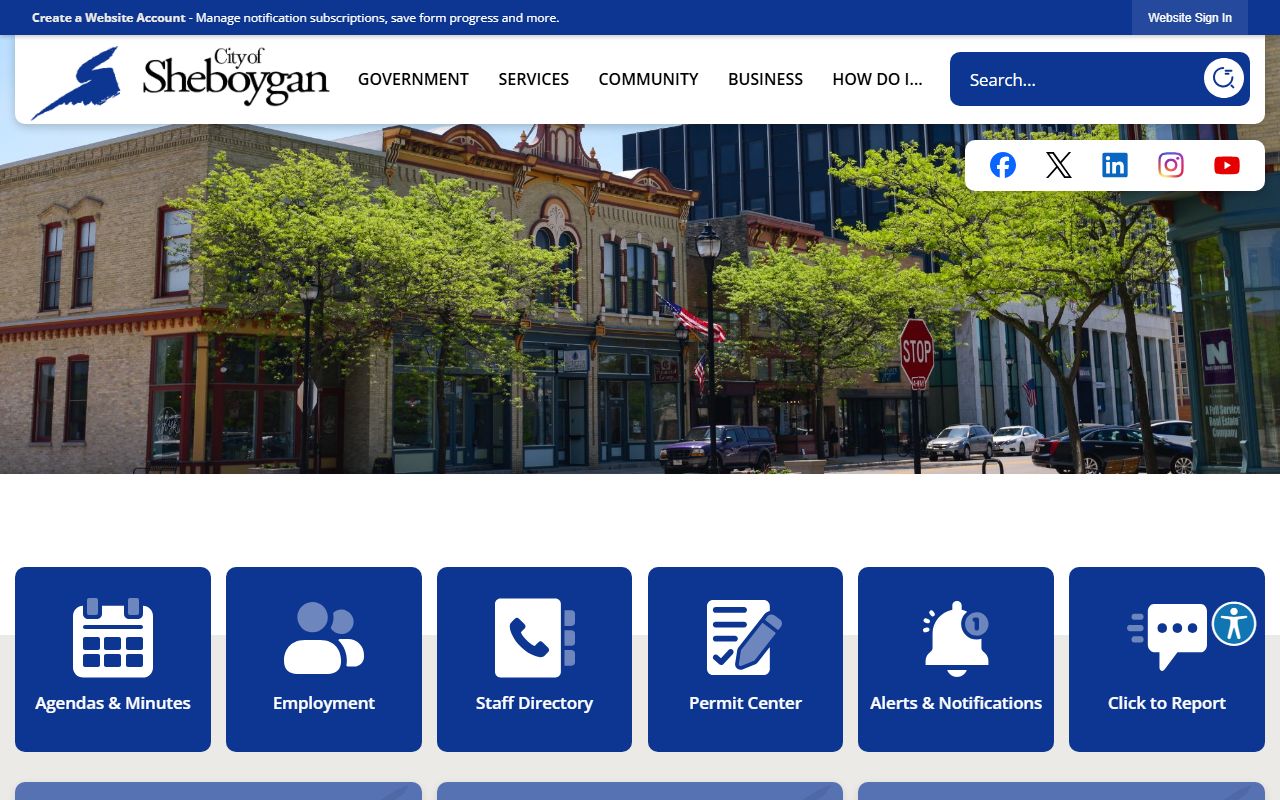
That local view fits a search that begins with the city itself and then fans out toward police, clerk, and court records only when needed.
Sheboygan People Search Police Records
The Sheboygan Police Department is at 1315 N. 23rd Street, Sheboygan, WI 53081, and the phone number is (920) 459-3333. The non-emergency number is the same, which makes it easy to reach the records side of the department without wondering whether you need a different line. That office is the best starting point for incident reports, crash information, and other police-related records that are tied to a specific event rather than a broad city matter. If you know the date, location, or report number, bring that detail with you because it narrows the search fast.
When a Sheboygan People Search starts with police, the most useful approach is to keep the request focused on one event or one person at a time. A short description of the incident, the approximate date, and the name of the person involved will usually do more good than a long explanation of why you need the file. If the information you are after came from an officer contact, a neighborhood complaint, or a follow-up report, the police department is the office that can confirm whether the record exists and whether it is available for release.
The police department contact line at (920) 459-3333 is useful if you need to verify whether a record is held locally before you build a longer request. In many local searches, that call is the point where you learn whether to stay with the police desk or move on to the clerk, court, or state records trail. The faster you sort the record type, the less time you spend chasing the wrong category of file.
Sheboygan People Search City Clerk Records
The Sheboygan City Clerk is at 828 Center Avenue, Sheboygan, WI 53081, and the office phone is (920) 459-3318. That office is the right place for local records that sit with the city instead of with the police, including council materials, ordinances, meeting records, local notices, and other municipal files. If a name appears in a city agenda, license record, or public hearing file, the clerk is often the office that can tell you where that document belongs. For a city-based search, that makes the clerk a much better fit than a generic online search box.
Sheboygan People Search also gets easier when you remember that city clerk records often help you confirm identity or context rather than prove every detail by themselves. A person can appear in a city notice for one purpose and in a police record for another, so comparing the clerk file with the police trail can show you whether you have the same person or two different people with the same name. That kind of cross-check is especially helpful when the name is common or when the record refers to a business address, former address, or old neighborhood location.
If you need the broader city directory, the home page at sheboyganwi.gov gives you the municipal entry point before you start sorting through department pages. The clerk office then becomes the practical follow-up when the record is clearly a city matter. That order keeps the search grounded in the office that created the file instead of sending you in circles between unrelated pages.
Sheboygan People Search Court and State Records
Once a Sheboygan search moves beyond city offices, the Wisconsin court system tools become the next practical stop. The Wisconsin Circuit Court Access system at wcca.wicourts.gov lets you search circuit court case information by name or case number, which is helpful when the person you are looking for has a county court file rather than a city file. If you already know the case style or docket reference, the search is usually straightforward. If you only have a name, WCCA still helps by showing whether the person appears in a public court record that belongs outside the city.
The broader court site at wicourts.gov is useful when you need forms, court structure, or help understanding which court handles a particular type of matter. Sheboygan People Search can easily run into this layer when you discover a case history, a filing, or a judgment that does not sit in a city office at all. The state court site gives the context that turns a name into a usable record trail, especially if you are trying to decide whether the matter belongs in circuit court, a municipal file, or another part of the system.
If the person you are searching may be in custody or under supervision, the Department of Corrections locator at appsdoc.wi.gov/lop is another useful check. For family history, certified copies, or older birth and death references, the vital records page at dhs.wisconsin.gov/vitalrecords/index.htm is the better path. Those tools do different jobs, but together they help you avoid assuming that every person search should end at the same desk.
Sheboygan People Search Next Steps
When the city trail is not enough, the easiest next move is to compare what you found at the police department or city clerk with what appears in the court system. A name that shows up in both places may point to a broader history, while a name that shows up only once may simply mean you are looking at the wrong office or the wrong spelling. Sheboygan People Search works well when you treat each source as a check on the others rather than as a stand-alone answer. That habit saves time and keeps you from over-reading a single result.
The Wisconsin Law Library at wilawlibrary.gov is useful when you need to understand the record path before you make a request, especially if you are trying to tell the difference between a public court entry and a city-held document. If you want to keep going after that, use the city website, the clerk office, the police department, WCCA, and the state directories in that order until the trail becomes clear. That sequence usually gets you to the right office with the fewest detours.
For a final pass, compare the city contact information, the court result, and the state directory against the same name and date range. That comparison often reveals whether you need to stay with a municipal file, move into court research, or shift toward a state record. The search box below gives you one more way to keep going if you want to test a second path.